How To Use A Pallet Truck: Practical Guide for Warehouses
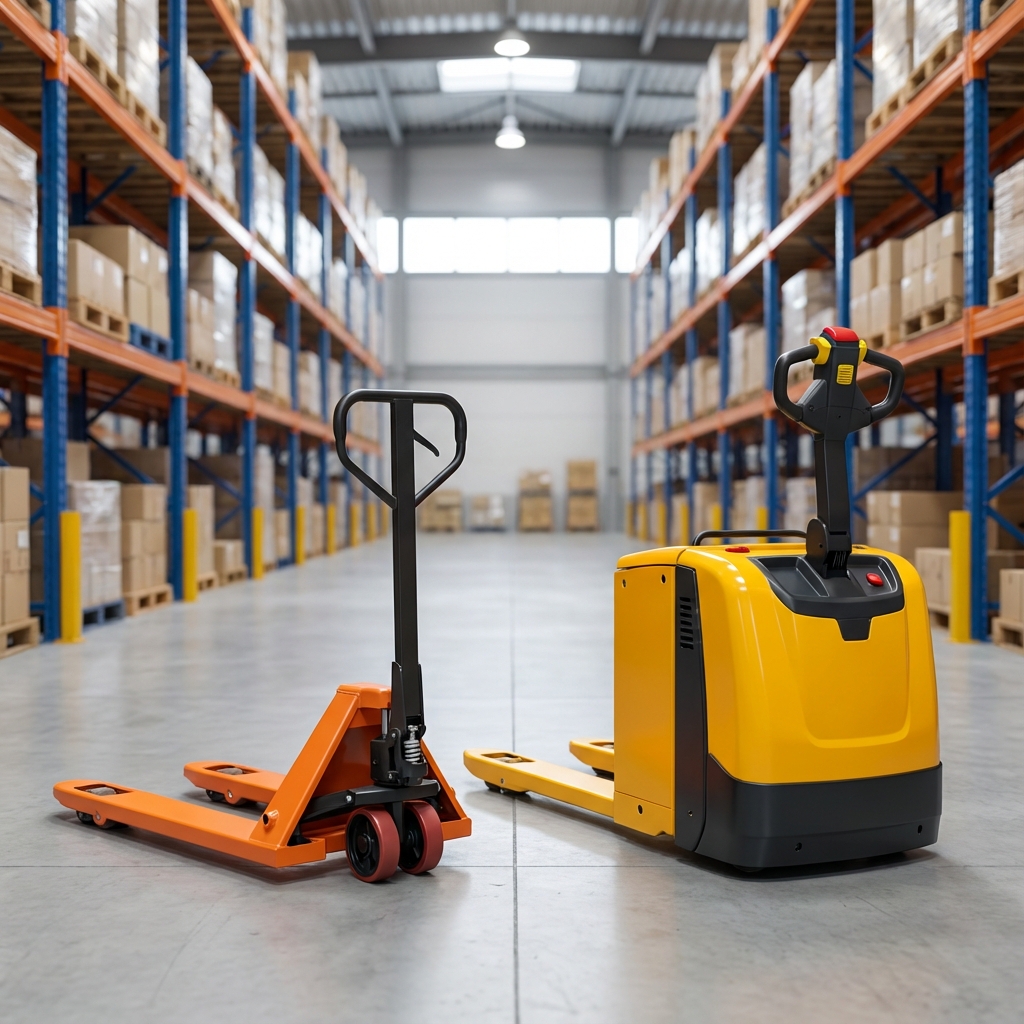
This step by step guide explains how to use a pallet truck with a focus on safe handling, smooth movement, and load stability. Use it for onboarding new operators or tightening safety routines.
Quick answer
Inspect the equipment, position the forks correctly, and move the load slowly with clear visibility. Most errors come from rushing the lift or turning too sharply.
Before you start
Check for visible damage, confirm hydraulic function, and make sure the travel path is clear. Wear appropriate footwear and gloves, and never exceed rated capacity.
Step by step process
- Align forks with the pallet openings.
- Insert forks fully to keep the load balanced.
- Pump or lift to clear the floor.
- Move slowly and keep the load low.
- Turn wide and avoid sharp angles.
- Lower the load gently when parked.
Safety checklist
- Keep hands and feet clear of pinch points
- Do not ride on the equipment
- Keep loads stable and centered
- Avoid slopes when possible
- Stop if visibility is blocked
Common mistakes
The most common mistakes are partial fork insertion, overloading, and turning too fast. Training and simple reminders reduce incidents.
Frequently Asked Questions
Q1: What does 'how to use a pallet truck' usually refer to?
It refers to the most common user intent for this topic. Focus on the practical decision your operation needs to make.
Q2: How do I choose the right option?
Start with load type, environment, and frequency of use. Then match specs, safety requirements, and budget.
Q3: Do I need special training or compliance checks?
For material handling equipment, basic safety training is recommended. For export pallets, check compliance rules.
Q4: Where should I buy from?
Work with suppliers that provide clear specs, consistent quality, and reliable support.
Conclusion
Safe handling depends on good habits. Follow the checklist, keep your speed low, and treat every move like a precision task.
---
Related Articles:
Shop Our Products:
Buyer questions
Ask suppliers these questions before committing:
- What quality checks are performed before shipment?
- Are replacement parts or accessories readily available?
- What is the typical lead time in peak season?
- How do you handle damage claims?
Operational tips
Standardize equipment across teams to reduce training time. Label storage areas and keep documentation in one place. Simple consistency improvements often deliver faster gains than expensive upgrades.
Mistakes to avoid
- Selecting equipment without checking floor conditions
- Overloading to save trips
- Skipping inspection routines
- Mixing incompatible pallet sizes
Quick recap
Focus on fit, safety, and consistent workflow. Those three factors solve most material handling decisions.
Pre use inspection
Before each shift, verify that forks move smoothly, wheels roll freely, and the handle returns to neutral. If the pallet jack feels stiff or noisy, remove it from service until inspected. This simple routine prevents unexpected failures mid shift.
Handling uneven floors
Uneven floors increase tip risk. If the surface is rough, slow down and keep the load low. Avoid sharp turns and never attempt to lift the load to compensate for floor slope. When in doubt, re route or use a different path.
Parking and storage
When the job is done, lower forks fully and park the unit out of traffic lanes. A clear parking zone reduces collisions and extends equipment life. Labeling the parking area also speeds up shift changes.
Quick recap
Focus on safety, fit, and consistent workflows. Those three factors solve most warehouse decisions.
Detailed planning framework
A reliable planning framework starts with three questions: what is the load, where will it move, and how often will it be handled. When you map those answers, you can choose the right pallet type, handling equipment, and safety routine. If your operation uses multiple shifts, document the exact sequence of steps so operators are consistent. Consistency protects equipment and reduces damage to goods.
Next, map the flow: inbound dock, staging, storage, picking, and outbound. At each stage, identify the equipment that touches the pallet or load. If there is a mismatch between pallet size and the handling equipment, fix it early. Most inefficiency comes from small mismatches rather than big failures.
Finally, create a standard checklist and review it monthly. A short checklist prevents avoidable errors and gives new operators a clear baseline.
Quality and risk control
Quality control is not a one time event. It is a simple routine repeated at receiving, staging, and daily use. For pallets, watch for cracked deck boards, missing fasteners, or warping. For handling equipment, watch for unusual noise, slow lift response, and worn wheels. When issues are found early, the fix is small and the cost is low.
Risk control also includes clear labeling. Mark high traffic paths and define parking areas for equipment. When equipment is stored consistently, operators waste less time and collision risk drops. Small operational changes like this often deliver better ROI than new hardware.
Implementation checklist
Use this checklist to implement changes without disrupting operations:
- Confirm the new pallet or equipment spec
- Train operators on the updated workflow
- Update signage and storage labels
- Run a short pilot in one zone
- Collect feedback from operators
- Standardize the change across shifts
A structured rollout makes adoption smoother and reduces confusion.
Training and documentation
Document the core steps in one page: inspection, operation, and shutdown. Keep that page near the equipment or inside the training pack. When new staff join, they can follow a short checklist instead of guessing. This improves safety, reduces damage, and keeps operations stable across shifts.
Detailed planning framework
A reliable planning framework starts with three questions: what is the load, where will it move, and how often will it be handled. When you map those answers, you can choose the right pallet type, handling equipment, and safety routine. If your operation uses multiple shifts, document the exact sequence of steps so operators are consistent. Consistency protects equipment and reduces damage to goods.
Next, map the flow: inbound dock, staging, storage, picking, and outbound. At each stage, identify the equipment that touches the pallet or load. If there is a mismatch between pallet size and the handling equipment, fix it early. Most inefficiency comes from small mismatches rather than big failures.
Finally, create a standard checklist and review it monthly. A short checklist prevents avoidable errors and gives new operators a clear baseline.
Quality and risk control
Quality control is not a one time event. It is a simple routine repeated at receiving, staging, and daily use. For pallets, watch for cracked deck boards, missing fasteners, or warping. For handling equipment, watch for unusual noise, slow lift response, and worn wheels. When issues are found early, the fix is small and the cost is low.
Risk control also includes clear labeling. Mark high traffic paths and define parking areas for equipment. When equipment is stored consistently, operators waste less time and collision risk drops. Small operational changes like this often deliver better ROI than new hardware.
Implementation checklist
Use this checklist to implement changes without disrupting operations:
- Confirm the new pallet or equipment spec
- Train operators on the updated workflow
- Update signage and storage labels
- Run a short pilot in one zone
- Collect feedback from operators
- Standardize the change across shifts
A structured rollout makes adoption smoother and reduces confusion.
Training and documentation
Document the core steps in one page: inspection, operation, and shutdown. Keep that page near the equipment or inside the training pack. When new staff join, they can follow a short checklist instead of guessing. This improves safety, reduces damage, and keeps operations stable across shifts.
Detailed planning framework
A reliable planning framework starts with three questions: what is the load, where will it move, and how often will it be handled. When you map those answers, you can choose the right pallet type, handling equipment, and safety routine. If your operation uses multiple shifts, document the exact sequence of steps so operators are consistent. Consistency protects equipment and reduces damage to goods.
Next, map the flow: inbound dock, staging, storage, picking, and outbound. At each stage, identify the equipment that touches the pallet or load. If there is a mismatch between pallet size and the handling equipment, fix it early. Most inefficiency comes from small mismatches rather than big failures.
Finally, create a standard checklist and review it monthly. A short checklist prevents avoidable errors and gives new operators a clear baseline.