What Is a Scissor Lift Guide 2026
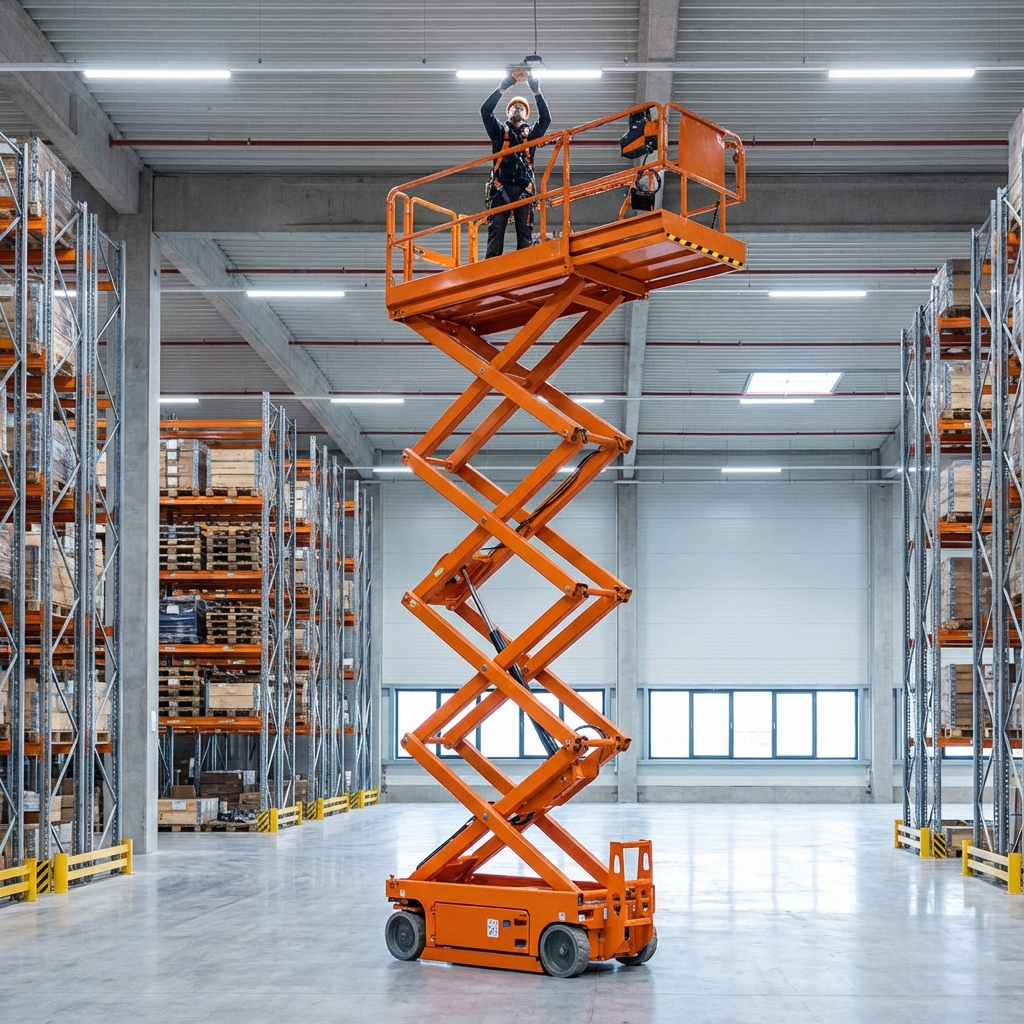
A scissor lift is a lifting platform that raises workers and tools vertically using a crossed-arm mechanism. In warehouse and facility conversations, the term can describe two very different categories: a personnel aerial lift for working at height, and a material lift table for raising loads ergonomically. The mechanism is similar, but the purpose, compliance rules, and buying criteria are not.
This guide explains the aerial-lift side first, then shows when warehouse teams should switch from an electric scissor lift to a material-handling product instead.
How a scissor lift works
The platform rides on a pantograph-style frame. When hydraulic pressure or an electric drive system extends the crossed members, the platform rises vertically. That is why a scissor lift is strong for direct overhead access but weak when the job needs horizontal outreach.
The key point is simple: a scissor lift goes up and down well, but it does not reach around obstacles well.
Main types of scissor lift
Electric scissor lift
The electric scissor lift is the standard option for indoor work. It runs quietly, produces no exhaust, and usually uses non-marking tires.
Best for:
- Warehouses
- Retail maintenance
- MEP work in finished interiors
- Facility lighting and sign changes
Typical specs:
| Spec | Common range |
|---|---|
| Platform height | 15 to 40 feet |
| Capacity | 500 to 1,200 lbs |
| Power source | Battery electric |
Rough-terrain scissor lift
This version is designed for outdoor conditions, larger tires, and uneven ground. It is better suited to construction and site work than finished warehouse floors.
Compact slab scissor lift
Compact slab models are used when floor loading, doorway width, or aisle space is tight. They are often the first pick for indoor work in active buildings.
Common scissor lift applications
Scissor lifts are common in:
- Warehouse lighting and sprinkler maintenance
- HVAC, duct, and electrical access
- Retail sign work
- Film and event rigging
- Indoor installation projects that need a stable deck
If the work point is directly above the machine, a scissor lift is often the most efficient access platform. If the platform needs to reach over conveyors, racks, or exterior awnings, compare it with a boom lift in Cherry Picker vs Scissor Lift.
Scissor lift vs boom lift
| Factor | Scissor lift | Boom lift |
|---|---|---|
| Movement | Vertical only | Vertical plus horizontal outreach |
| Platform size | Larger | Smaller |
| Best job type | Open, direct access above | Obstacle-heavy or offset access |
| Indoor use | Strong | Limited to selected models |
| Typical cost | Lower | Higher |
For a dedicated boom explanation, read What Is a Boom Lift.
When warehouse teams actually need a lift table instead
A large share of warehouse searches for “scissor lift” are really about ergonomic material handling. If the job is raising boxes, parts, totes, or pallets to working height, a scissor lift table is usually the correct product, not a personnel aerial lift.
That is where pages like scissor lift tables and electric lift tables become more relevant than equipment rental catalogs. A product such as CART-1000-2040-CTD is built for moving materials, not for carrying people to overhead work points. If your workflow is more about ergonomic load positioning than overhead access, the Hydraulic Lift Table Buying Guide is the better next read.
Price ranges in 2026
Buyers usually compare rental first:
| Equipment | Daily rental | Weekly rental | Purchase range |
|---|---|---|---|
| Electric scissor lift | $150 to $250 | $500 to $800 | $15,000 to $25,000 |
| Rough-terrain scissor lift | $250 to $450 | $900 to $1,500 | $25,000 to $45,000+ |
If the job lasts a few days or happens once or twice per year, rental usually makes sense. If the equipment is used frequently, run the numbers in Scissor Lift Rental vs Buy.
Need help choosing? Request a free quote with your working height, floor conditions, and whether the job lifts people or products.
Safety basics
Two references matter often in the US:
- OSHA 29 CFR 1926.453 for aerial lift safety
- ANSI A92 guidance for mobile elevating work platforms
Basic operating rules:
- Inspect the machine before use
- Confirm floor or ground support conditions
- Keep gates and rails secure
- Do not exceed platform capacity
- Maintain clearance from overhead obstructions and power sources
For electric scissor lift work in active warehouses, traffic control matters as much as platform operation. Pedestrian paths, forklift lanes, and drop-zone control need to be clear before the platform goes up.
How to choose the right scissor lift
Choose the platform by asking:
- Is the job people at height or materials at height?
- Is the work point directly above the machine?
- Will the lift run indoors, outdoors, or both?
- How much platform space and capacity are needed?
- Is the job frequent enough to buy rather than rent?
Those five questions usually narrow the decision faster than spec sheets alone.
FAQ
What is a scissor lift used for?
A scissor lift is used for lifting workers, tools, or in some cases materials vertically to a safe working height. Electric scissor lift models are especially common in warehouses and indoor maintenance environments.
What is the difference between a scissor lift and an electric lift table?
A scissor lift usually refers to a personnel aerial platform, while an electric lift table raises products or pallets for ergonomic work. They may share a scissor mechanism, but they are designed for different tasks and safety rules.
How much does an electric scissor lift cost in 2026?
Electric scissor lifts often rent for about $150 to $250 per day and commonly sell in the $15,000 to $25,000 range depending on height, capacity, and battery package.
When should I choose a cherry picker instead of a scissor lift?
Choose a cherry picker or boom lift when the work point is behind an obstacle or requires horizontal reach. Scissor lifts are better when the work point is directly overhead.
Where should a warehouse buyer start if the job is really material handling?
Start with scissor lift tables, electric lift tables, and a material-handling product example like CART-1000-2040-CTD. Those pages match ergonomic load lifting far better than aerial rental equipment.
The right scissor lift choice depends on what is going up: people, tools, or products. If the task is vertical overhead access, compare electric and rough-terrain lift options. If the task is ergonomic product positioning, shift the search toward lift tables and request a quote from PalletCorner.