What Is a Pallet? Complete Guide to Types, Sizes, and Materials
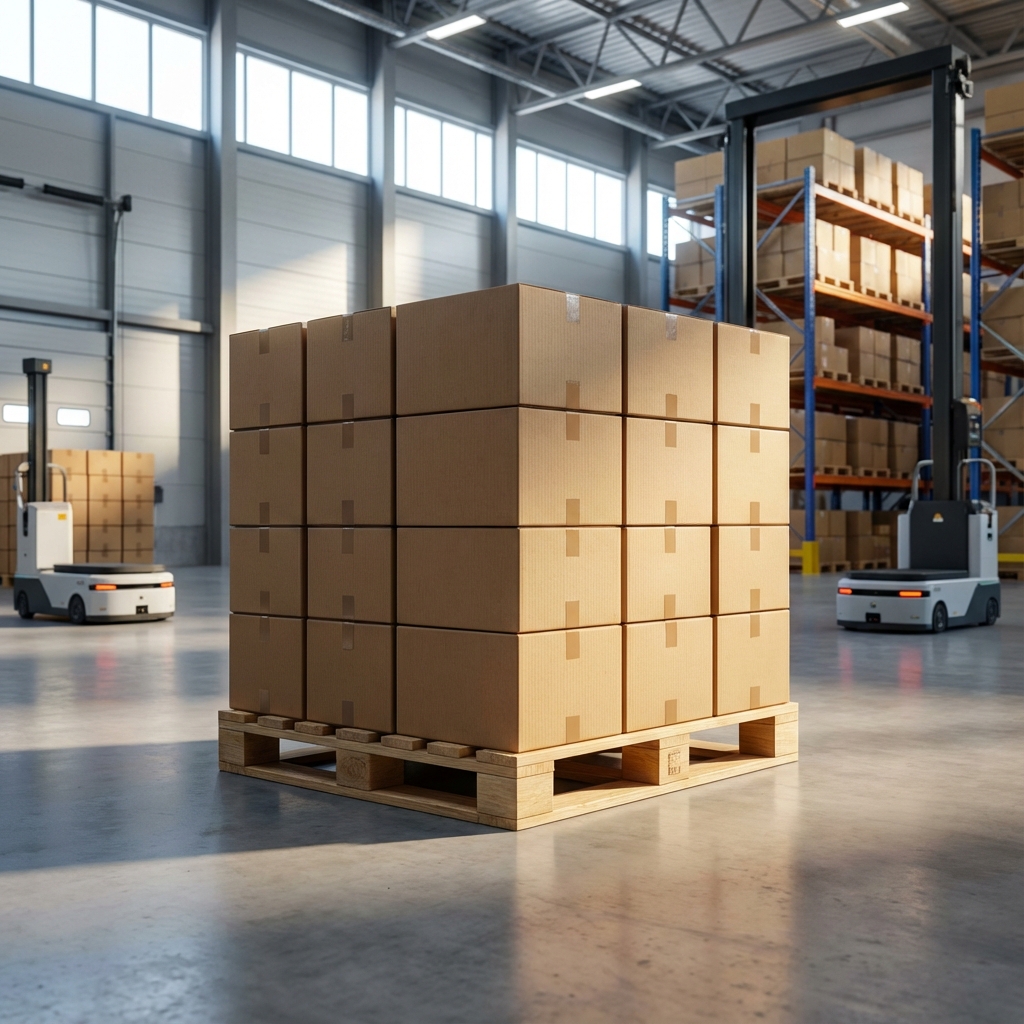
If you are new to shipping or warehousing, you may ask how pallets work and why nearly every warehouse relies on them? A pallet is a rigid, flat platform that supports goods so they can be lifted, moved, and stored safely. This guide explains the role of pallets in logistics, the main types and sizes, and how to choose the right pallet for your product and workflow.
1. Definition and purpose
At its core, a pallet is a stable base that allows a unit load to be moved with forklifts, pallet jacks, or conveyors. Pallets reduce manual handling, protect goods from floor moisture, and speed up loading at docks. They also standardize shipping, which helps warehouses plan storage, racking, and transport more efficiently.
2. Major pallet types
Pallets fall into three main categories, each with strengths and tradeoffs:
Wood pallets
Wood pallets are the most common in North America. They are cost effective, easy to repair, and widely available. They work well for general distribution, retail replenishment, and warehouse storage. Heat treated wood pallets are used for export to comply with international requirements.
Plastic pallets
Plastic pallets are preferred in industries that require clean and sanitary handling, such as food and pharmaceuticals. They are resistant to moisture, easy to wash, and consistent in size and weight. The main drawbacks are higher upfront cost and less repairability.
Metal pallets
Metal pallets are used for heavy loads, harsh environments, or fire resistance needs. They are durable, long lasting, and often used for automotive, chemicals, or heavy manufacturing. Their weight and price usually limit them to specialized use cases.
3. Standard pallet sizes
Standard sizes help pallets fit equipment, trailers, and rack systems. In the United States, the 48x40 inch pallet is the general standard, especially for consumer goods. In Europe, the Euro pallet (1200 x 800 mm) is widely used. Other sizes exist for drums, bulk goods, or specific supply chains.
Common sizes include:
- 48x40 in for general distribution
- 42x42 in for telecom and drums
- 48x48 in for bulk and drum loads
- 1200 x 800 mm for Euro pallet systems
- 1200 x 1000 mm for UK and Asia markets
4. Materials and selection criteria
When customers ask which pallet they should buy, the answer depends on load, environment, and reuse. Consider these factors:
- Load weight and distribution: Heavier loads require stronger deck boards and stringers.
- Environment: Outdoor storage favors plastic or treated wood.
- Reuse cycle: Closed loop systems can support higher cost pallets.
- Handling equipment: Make sure fork entry matches your forklift or pallet jack.
- Regulatory needs: Export pallets often must be heat treated.
A safe default for many operations is the 48x40 wood pallet. For product options, see Pallets.
5. Design basics that affect performance
Pallets can be two way entry or four way entry depending on their structure. Block pallets allow entry from all sides, while stringer pallets often allow entry from two or four sides depending on notches. Deck board thickness, nail patterns, and wood grade all influence durability. If you ship heavy goods, ask for reinforced deck boards or double stringers to reduce damage.
6. How pallets support warehouse efficiency
Pallets improve pick speed and reduce handling time. They also protect goods from forklift impact by keeping products elevated and stable. When you evaluate pallets from a process view, they are tools for reducing labor and damage across the entire supply chain.
7. Safety and handling guidance
Even the best pallet can be unsafe if it is damaged or overloaded. Inspect pallets before use, remove broken boards, and keep loads centered. Avoid stacking unstable loads and follow safe handling practices. For general material handling guidance, review OSHA resources at OSHA.
8. Common pallet terms
- Deck boards: The top or bottom boards that support the load.
- Stringers: The runners between deck boards on stringer pallets.
- Blocks: Solid supports on block pallets.
- Entry: The side where forks can enter.
- Two way entry: Forks enter from two sides.
- Four way entry: Forks enter from all sides.
Knowing these terms helps you compare listings and avoid ordering mistakes.
Pallet grades and quality control
Not all pallets are equal. Many suppliers grade pallets by appearance and structural integrity. A Grade A pallet is typically clean, uniform, and safe for repeated use. A Grade B pallet may show wear or repairs but can still be reliable for many applications. If you sell to customers or ship retail goods, consistent grades protect your product and your brand. Always ask vendors about inspection criteria, nail patterns, and repair standards. A clear grading system also helps buyers compare price versus durability in a fair way.
Stringer vs block construction
Two common designs are stringer and block pallets. Stringer pallets use long runners to support the deck boards. They are common in North America and are often lower cost. Block pallets use solid blocks at the corners and center, which usually allow four way entry. Block pallets can be more stable for heavy loads, but they may cost more. If you rely on pallet jacks in tight aisles, four way entry can improve efficiency and reduce time spent repositioning the load.
Storage, stacking, and racking
Pallets must match your storage method. For floor stacking, consistent sizes and stable loads are most important. For racking, you need pallets with adequate strength and proper entry to avoid damage. Use stretch wrap or straps for tall loads, and keep weight centered. Avoid mixing different pallet sizes in the same rack bay because it can create uneven support. A good storage policy includes maximum stack height, lane labels, and routine inspections.
Sustainability and reuse
Pallet reuse saves cost and reduces waste. Many companies maintain a repair loop where broken boards are replaced and pallets are returned to service. Some facilities use pallet pooling programs that reduce the need to buy new pallets. If sustainability is a goal, track reuse cycles and set a threshold for retirement. Wood pallets can often be recycled into mulch or fuel, while plastic pallets can be reground and remolded.
Quick selection checklist
Use this quick checklist before placing an order:
- Confirm pallet size and fork entry requirements
- Match load weight to pallet rating with a safety margin
- Choose material based on environment and hygiene needs
- Select a grade that fits product value and handling frequency
- Align with internal handling equipment and rack systems
A short checklist prevents ordering mistakes and reduces rework in the warehouse.
Pallet testing and load ratings
Testing helps verify that a pallet can handle real world loads. Pallet performance is influenced by wood grade, nail placement, and deck spacing. A simple way to think about testing is to consider how a pallet behaves under static loads, dynamic movement, and stacking pressure. When customers ask what is a pallet that can handle their load, the answer should include a load rating and a clear safety margin. Ask suppliers for rating data, and match it to the heaviest load you expect to move.
Export and compliance needs
International shipping often requires heat treated pallets to prevent pest transfer. If you export goods, check for ISPM 15 stamps and confirm the pallet is compliant. Some industries also require pallets to meet sanitation or labeling standards. For export buyers, knowing what is a pallet that meets compliance requirements is just as important as knowing its size and material. Build compliance checks into your receiving process so you do not discover issues at the port.
Cost drivers and budgeting
Pallet pricing depends on material, grade, size, and availability. One way to control cost is to standardize sizes and reduce variety. Another is to use repair and reuse programs for long life cycles. If you are estimating costs and asking what is a pallet worth in your operation, include repair labor, disposal, and downtime. A slightly higher quality pallet can be cheaper over time if it reduces damage and replacement rates.
Pallet pooling and rental programs
Large shippers often use pallet pooling programs instead of buying pallets outright. Pooling reduces the need to store extra pallets and simplifies retrieval. A pool provider collects pallets after delivery, inspects them, and returns them to circulation. This model can reduce waste and improve consistency. It also shifts repair and compliance work to the pool operator. If your network spans many locations, pooling can reduce administrative effort and keep pallet quality more consistent.
Common damage patterns and prevention
Most pallet damage comes from fork impact, overloading, and poor stacking. Forks striking the edge of a pallet can loosen nails and break deck boards. Overloaded pallets bow and crack under pressure. Uneven stacking puts stress on corner blocks and can lead to collapse. To reduce damage, train drivers to approach squarely, maintain fork height, and move at a controlled speed. Use load diagrams and weight limits on picking screens so teams can build stable loads the first time.
Common pallet mistakes to avoid
Mistakes often happen during fast paced operations. Using the wrong size pallet can create instability on racks and trailers. Overhanging boxes can be crushed when pallets are stacked too tightly. Another common error is mixing pallet types in the same load, which causes uneven support and damage. Avoid these issues by standardizing sizes, verifying load diagrams, and using stretch wrap for tall or uneven loads.
Sizing for automation and conveyors
If your facility uses conveyors or automated storage, pallet dimensions must be consistent. Even small size variations can cause jams or unplanned stops. Work with suppliers who provide consistent dimensions and quality control. Automation requires tighter tolerances than manual handling, so consider higher grade pallets for automated lines.
Buying tips for first time pallet orders
If this is your first order, start with a small batch and test in your workflow. Check fork entry, confirm pallet height on racks, and verify that loads remain stable during transport. Gather feedback from drivers and pickers before scaling up. A pilot order can save money and avoid disruptions if the pallet design is not a good fit.
Pallet lifecycle tracking
Tracking pallet usage helps reduce loss. Simple tools like labels or barcodes can show how long a pallet stays in circulation and where damage occurs. Over time, this data supports better purchasing decisions and fewer emergency orders.
Working with suppliers
Share clear specs with suppliers, including size, entry, grade, and load rating. Ask for photos and sample pallets before committing to a large order. Clear communication reduces delays and ensures the pallets you receive match your operating needs.
Quick recap
Focus on consistent size, safe handling, and clear supplier specs. Small improvements in pallet choice can reduce damage and speed up every dock and aisle movement.
Frequently Asked Questions
Q1: What are pallets used for?
A pallet is used to stabilize goods so they can be moved and stored with forklifts or pallet jacks.
Q2: What are pallets made of?
Most pallets are made of wood, but plastic and metal are also common.
Q3: What pallet size should I buy?
For most US warehouses, the 48x40 inch pallet is the default standard.
Q4: Are pallets reusable?
Yes. Many pallets can be repaired and reused multiple times depending on load and handling.
Conclusion
Now you can answer the basic pallet question with confidence and choose a pallet that matches your load, environment, and workflow. If you want a fast starting point, review Pallets and compare with Skid vs Pallet.
---
Related Articles:
Shop Our Products: