Electric Stacker vs Manual Guide 2026
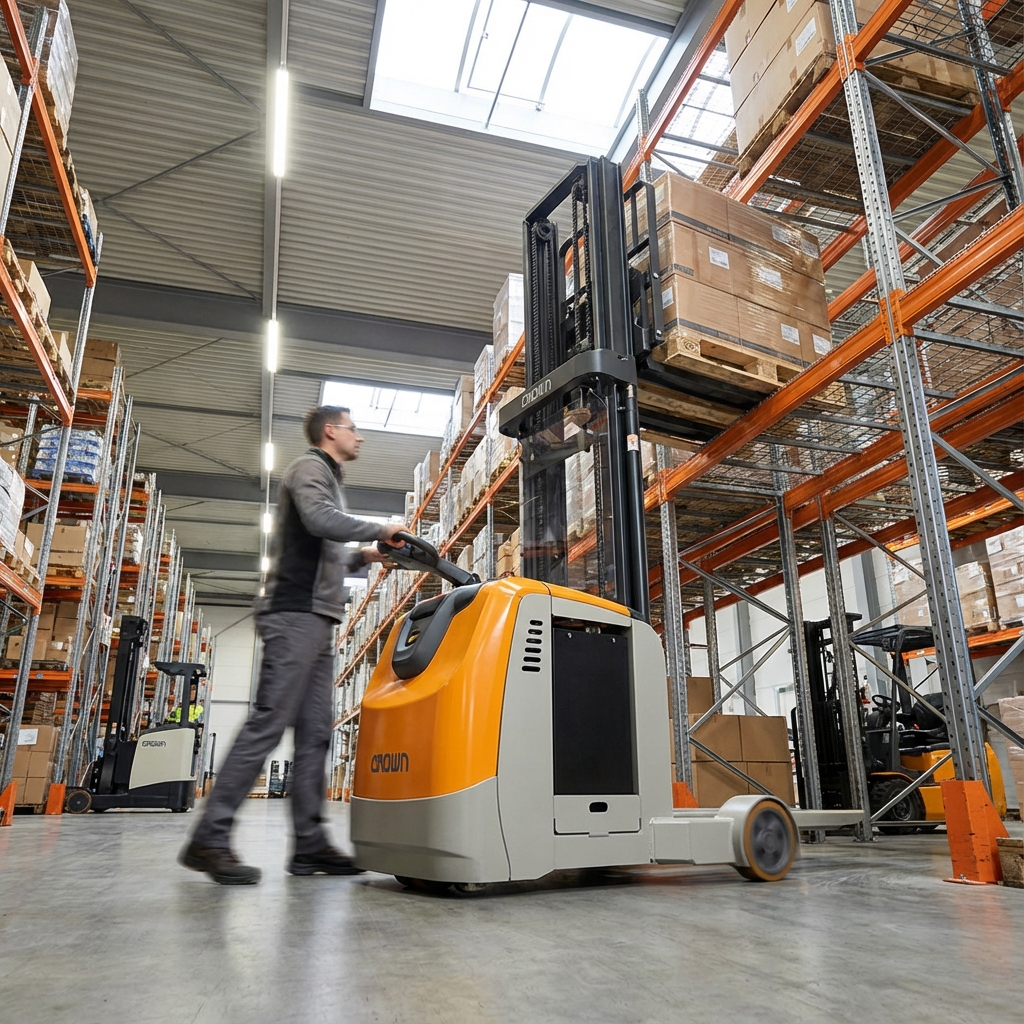
A stacker sits between a pallet jack and a forklift. It can lift pallets higher than a pallet truck, but it usually costs less and takes less space than a full forklift fleet. The real buying question is whether you need an electric stacker, a manual stacker, or a walkie stacker configuration that balances lift height, labor, and floor space.
This guide compares the most common stacker choices for 2026 and shows where each one fits.
What a stacker does better than a pallet jack
A pallet jack moves loads at floor level. A stacker can raise pallets to shelving, staging platforms, or work height. That makes stackers useful when the warehouse needs more vertical handling but does not want the cost or turning envelope of a forklift in every zone.
If your job is only floor-level movement, review how to use a pallet truck or compare pallet jacks first. If you need vertical placement in tight aisles, a stacker is the right category to explore.
Manual stacker: lower cost, lower speed
A manual stacker uses manual pushing and either hydraulic pumping or assisted lift controls. It works best where cycle counts stay low and budgets are tight.
Where manual stackers fit
- Low-volume storage rooms
- Light-duty production support
- Small warehouses with occasional vertical stacking
- Backup equipment for overflow periods
Manual stacker advantages
- Lower purchase price
- Fewer powered components to maintain
- No battery charging process
- Straightforward operation for limited use
Manual stacker limits
- More operator effort
- Slower travel and lift cycles
- Less practical in multi-shift or high-volume work
Electric stacker: productivity and repeatability
An electric stacker reduces the physical effort required for lifting and, in many models, travel. That makes it a better fit for operations where pallets move frequently and operators need consistent cycle time.
Where electric stackers fit
- Repetitive put-away and replenishment
- Distribution centers with narrow aisles
- Manufacturing lines that need frequent pallet staging
- Operations where labor fatigue is already a bottleneck
Electric stacker advantages
- Faster lift cycles
- Lower operator fatigue
- Better fit for frequent use
- More consistent performance with heavier loads
Electric stacker tradeoffs
- Higher upfront cost
- Battery and charging management
- More components that need preventive service
What is a walkie stacker?
A walkie stacker is an electric stacker operated by a walking operator instead of a ride-on platform. Many buyers search “walkie stacker” because they want powered lifting and compact control without jumping to a larger forklift.
Walkie stackers are a strong fit when:
- Aisles are tighter than forklift-friendly layouts
- Operators move pallets short to medium distances
- The building wants powered lift without full forklift overhead
- Loads need to be staged to shelving or low rack levels
Think of the walkie stacker as the practical middle ground between a powered pallet jack and a forklift.
Head-to-head comparison
| Factor | Manual stacker | Electric stacker | Walkie stacker |
|---|---|---|---|
| Typical price | $1,000 to $3,500 | $4,000 to $12,000+ | $5,000 to $14,000+ |
| Lift height | Low to medium | Medium to high | Medium to high |
| Daily cycle capacity | Light duty | Medium to high | Medium to high |
| Operator effort | Highest | Low | Low |
| Best building size | Small | Medium to large | Medium to large |
How to choose the right pallet stacker
1. Start with lift height
If the warehouse only needs waist-high positioning or low shelf placement, a manual stacker may work. Once the process requires regular vertical stacking to storage levels, electric power becomes easier to justify.
2. Check aisle width and turning space
Compact walkie stackers are useful in aisles where forklifts feel oversized. That is one reason many buyers start from stackers and then narrow to semi-electric stackers or fully-powered stackers.
3. Look at daily pallet count
Low-frequency work can stay manual. High-frequency work usually pushes buyers toward electric because labor strain compounds quickly.
4. Match load weight to real use
Do not spec from average weight if the building routinely handles heavier outbound or replenishment loads. Use the heaviest normal load and keep a safety buffer.
Practical use cases
| Use case | Best choice | Why |
|---|---|---|
| Small stockroom with occasional shelf placement | Manual stacker | Lower cost, simple use |
| Repetitive pallet staging in a warehouse | Electric stacker | Better speed and lower fatigue |
| Tight aisles with frequent moves | Walkie stacker | Compact control with powered lift |
| Multi-shift replenishment | Fully powered stacker | Better throughput and consistency |
Product direction from PalletCorner
If you want a real example of a powered warehouse stacker, compare a model like S-101-AA-DM. Use it as a benchmark for mast style, drive assistance, and lift control. Then compare that against semi-electric stackers if you want to reduce cost while keeping some powered support.
Need help choosing? Request a free quote with your aisle width, target lift height, and daily pallet volume.
Cost and ownership thinking for 2026
The sticker price matters, but stacker ownership should be judged against labor and space:
- A manual unit saves money upfront
- An electric stacker saves labor as cycle count rises
- A walkie stacker often saves both labor and aisle space compared with larger equipment
That is why many warehouses do not ask “which is cheapest?” They ask “which option keeps the lane moving without forcing a forklift into every task?”
FAQ
What is the difference between an electric stacker and a manual stacker?
An electric stacker uses powered lift and often powered travel, while a manual stacker relies much more on operator effort. Electric models are better for repetitive work and heavier daily cycle counts.
What is a walkie stacker used for?
A walkie stacker is used for compact, powered pallet handling where the operator walks behind the truck. It is common in warehouses that need vertical stacking but have tighter aisles than a forklift likes.
How much does an electric stacker cost in 2026?
Electric stacker pricing often starts around $4,000 and can move above $12,000 depending on mast height, battery system, and travel features. Walkie stackers commonly sit in a similar or slightly higher range.
When should I choose a manual pallet stacker?
Choose a manual stacker when the work is occasional, lift heights are moderate, and budget matters more than speed. It is a strong fit for low-volume vertical handling.
Where can I compare pallet stacker options?
Start with stackers, then narrow to semi-electric stackers or fully-powered stackers. PalletCorner can also review your aisle width and lift target before you buy.
If your warehouse is outgrowing manual lifting but does not need forklift scale in every lane, a walkie or electric stacker is often the next move. PalletCorner can help compare pallet stacker options based on lift height, aisle width, and throughput.